Do we take football too seriously? Chris Nee thinks so. From pub lounge discussions about the Premier League to the touchline at a school match, too many of us seem to have forgotten why most of us got involved in the game in the first place. Better strap yourselves in for this one, folks. It’s pretty long.
In sport, only football is universal. All over the world groups of people need nothing more than a ball and some space to tap into the greatest sporting phenomenon in history. It’s accessible, popular and unifying - when two teams take to the field at any level language doesn’t matter. Above all, it’s fun - or it should be. Most people who read twofootedtackle.com will agree that football is the best game ever created. The best game.
I hate it when other people say that “it’s just a game”, because it’s not just a game; games are socially, economically and culturally important and this one is the pinnacle. But as I’ve learned more about football, grown up a little and found myself becoming gradually disillusioned with top-level football, I’ve increasingly thought we’re missing a trick.
Has the fun been beaten out of football? Of course it hasn’t, and I wouldn’t try to argue as much. Football was fun when I watched my team score six goals to reach a Wembley final. Football was fun when I balanced the ball on my foot and watched my mate fall on his arse while I scooped it past him. Football was fun when I went mental at Gander Green Lane after Tooting & Mitcham United’s dramatic stoppage time equaliser on New Year’s Day. By and large, that’s how it is. However, I believe that we all take football too seriously too often, and the effects of that tend to overshadow both the wonderful moments we experience and the general underlying buzz of just being a football person.
Let’s begin at the top of the English game. The seriousness with which we discuss the Premier League - and Europe’s other top flights, for that matter - is mind-bending. It’s happened at the water cooler and in the pub for as long as football and water coolers have existed, but the internet age has brought with it more intense debate and, combined with other technologies that have encroached onto the game, encouraged us to pore over every statistic, argue every refereeing decision and pick the bones out of every player’s positioning, contribution and attributes.
Debate in football, as in all walks of life, is healthy and necessary. But in football (this is probably also true in all walks of life, but I don’t generally get involved in debate outside football) it isn’t really fun anymore. The vast majority of us are totally partisan and entirely unwilling to budge in our opinions, so what’s the point? I support Aston Villa, you support Birmingham City - we’re not going to agree on the penalty Roger Johnson conceded against Villa last season because we’re not really debating at all, we’re fighting a corner.
At least in most cases the person on the other side of the discussion is another football supporter, a follower of the game who just happens to have been born into another club’s culture. Even worse than our faux-debate with one another are the arguments we have with fairweather fans, the hours and hours of powerful, worthless bickering with some foppish idiot who doesn’t share or understand our passion and commitment, but do know that “their” team just beat ours - because someone told them.
Does any of this even matter? Is this what this incredible phenomenon has been boiled down to?
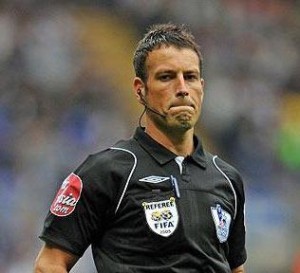
Of course, a significant amount of those conversations stem not from a natural development of our footballing cultures but the technological advances of the last 25 years and the behaviours they enable and encourage. Televised football with replays leads to a culture of over-zealous assessment of every single incident in every single game. We see multiple angles and judge referees accordingly, sometimes hounding them as a result but always coloured more by our allegiances than the correctness or otherwise of the actual decision.
While I’d love to argue that this doesn’t matter either, I’m aware that I’min the minority and fear that things will eventually turn against me. Something I’ve discussed probably more than anything (other than Martin O’Neill) since I launched this site is technology in football. I’ve made all the arguments against it and heard all the justifications, all of which leave me unconvinced so far. But for me the most important thing isn’t whether football should or shouldn’t bring in video replays or goal-line technology, it’s that the debate only exists because we - fans, players, clubs and media together - take this whole thing far too seriously. Football is supposed to be fun, not a relentless test of wallets in which everything is simply too crucial, too uncompromisingly vital to allow human error. Thou shalt not be wrong. EVER.
Perhaps the most concerning of all the symptoms of football’s seriousness is the constant striving for success and improvement. Chasing the dream sounds great, but I think there’s virtue in just existing in this game and if a team chases too hard it can genuinely put itself at risk of losing that. We are obsessed with success over time, with progressing forwards and joining the big time, whether that’s reaching the Premier League or jumping from non-league into the bottom division. There’s nothing wrong with success, of course, but against such severe costs it doesn’t seem so worthwhile. After all, this is a part of our character, a part of life that can’t be removed, and we’ll keep on going to the game every Saturday regardless of how well the lads are doing. Because it’s fun, and we’re there to support them, not just celebrate their achievements. Right?
Why are success, and in turn football, treated with such gravity? It’s partly down to money, of course, and I suppose that’s the most impactful single factor. The cynic in me wants to talk about greed and chasing the almighty dollar here, but that’s only part of the great football finance equation. While some clubs have been able to use success to drive a money-gathering juggernaut, others must succeed - or at least tread water - in order to avoid going out of business. In either position the big decisions of a referee and the number of shots on target matter, but both might have been avoidable in hindsight.
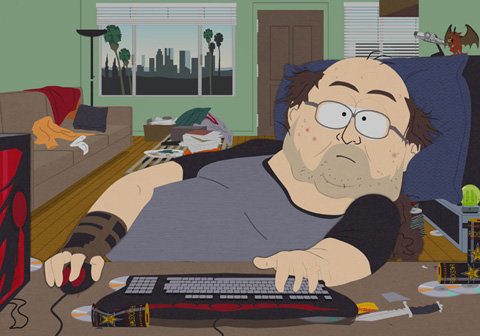
Furthermore, importance is in the eye of the beholder and the beholder isn’t just the man on the terraces anymore. It’s legions upon legions of part-time fans with full-time opinions who spend their lives defending their clubs’ honour against some invisible threat to their supremacy. For those of us who actually get under the skin of football every weekend, these keyboard warriors quickly become irritating. (I should clarify here that I’m not labeling all overseas fans of Premier League or European clubs here - millions of them around the world embrace football as a sport outside their own club and make a huge contribution to the new online experience offered by the game’s global community.)
But the seriousness with which the game is treated isn’t just down to the dark forces of modernisation and globalisation. Football has always been viewed with a gritty severity and that stems from the simple fact that somewhere in human nature sits the need to win - just asking Charlie Sheen. Unfortunately, somewhere along the line we forgot that this was supposed to be about having fun as well as winning matches.
So far, this extended rant about the things that annoy me about football has covered a list of habits that I’d prefer to be different. However, there is an area of the game where it actually has the potential to be massively damaging - and, in fact, already is. At the youth and grassroots level, taking football too seriously has arguably led not only to participation being less enjoyable but also to significant drops in numbers. Referees stream out of the game annually because of abuse from the touchlines, and without them - as a video from the Football Association once reminded us - there is no game.
Touchline behaviour and pressure on offspring from parents is a significant issue in football. To strip it back to a national level, without facilities, referees and players, youth football becomes a talent sieve. Imagine the players England might have missed out on in the last 20 years because there weren’t enough playing fields, or referees, or coaches. Worse, think how many might have packed it all in because they got sick of (their) parents constantly shouting advice or abuse. That’s without factoring in the violence that occasionally occurs during youth or grassroots matches, so often triggered by nothing more than a refereeing decision.
The real tragedy in all this is that there are aspects of football that are truly important and they get overlooked by our obsession with results and success. I’ve mentioned having fun a few times in this post already and, for me, that’s what’s important - not just on the pitch, but off it too. What matters in football is being involved in a global culture like no other, but it’s also the trivia and nonsense that add an extra dimension to conversations with friends. It’s camaraderie and a sense of belonging to both a club and a sport. The universality of football, so central for opponents of technology in football, is also of paramount importance in terms of accessibility, which is what makes football utterly superior.
What’s more important? Is it whether the ball crossed the line in a game that may or may not have seen a team miss out on a playoff spot six months later, or is it Jakob Lopez, the talented Leesville High School player whose love for the game helped him overcome his 2009 heart transplant (before which he was told it would end his fledgling career) to secure a football scholarship from Mary Hardin-Simmons University less than a year later? Jakob’s story is the perfect illustration of the difference between importance and seriousness in football. It is important, but where it really matters it should be celebrated and not stifled.
So, where should football be taken seriously? The power it wields is remarkable and putting that to effective use should be where our efforts are focused if we can’t be satisfied with just enjoying ourselves. Football has the ability to drive enormous charity efforts and is even the spine of entire charities. Using football’s large global audience for good is a matter of real seriousness, and is usually treated as such.
Let’s focus on that, because it’s the real heart of the game. What happens on the pitch is ultimately immaterial. Everything that surrounds it - culture, camaraderie, fun, charity - is what really matters.
Lovely stuff this. I had a lot of ideas like these sloshing around my mind that I wanted to formulate into an article (especially the idea of the game being a ‘game’, and perhaps beyond the realm of ‘sport’ - but that that wasn’t a bad thing).
My ideas have been convoluted to date though, perhaps I’ll try in the near future if I can offer a fresh approach. Glad you see it like this though. Lots of sports journalists appear to take things over-serious too, as if to justify their role. Everyone (should) know that what’s covered on the front pages is more important than the back and shouldn’t be concerned by that.
Excellent piece, agree with nearly everything you say. When will people games are not decided by one penalty call but by a TEAM’s effort over 90 (or even 120) minutes. They seem to forget it’s a team sport, heaping all the glory or blame on one player or official. Who cares if Frank Lampard’s goal was over the line against Germany? We got well and truly thrashed by a better team.
Football mirrors life, in that it’s ultimately a futile exercise. Success is but a minute segment of the game, it’s what all teams/players are striving for and very few could claim to achieve. Sometimes just playing football’s good enough.
Like FF I agree with pretty much everything you say.
It always irks me when the point is made that “we must have technology in the game because of the amount of money invested in it”. Well, that’s the issue for those investing money into a beautifully imperfect arena.
Excellent article.
Excellent stuff. I would urge you to read Joe Humphrey’s “Foul Play” for an elongated pronouncement on this very theme.
Good article. Much of the fun has been lost from the game. A lot, but not all of this is due to money. I take the point about money, especially as I’m from Crawley and although I have enjoyed Crawley Town’s form this season, it is tinged with a bit of embarrassment that this may have been bought. However, teams have had big money spent on them in the past and success hasn’t followed so there is probably a bit more to it than just the money.
Anyway, I digress.
The article reminded me of a day, quite a few years ago, when I ran the line at a match. I have no qualifications but do have a reasonable knowledge of the rules. This was in the days when you didn’t need a university degree to understand offside.
As there was nothing at stake and as I wasn’t directly related to any of the players, I was asked to run the line. It was a children’s match and it was a pre-season friendly. Although my friend’s son was in one of the teams, everyone was satisfied that I was sufficiently neutral - though I suppose the nature of the game helped in this.
I didn’t have much to do. Just the occasional offside decision. A couple were borderline and I did hear several grumblings of discontent. I performed honestly. I may have made an error or two but I gave everything exactly as I saw it.
During the game, one of the lads took a throw-in. His technique involved lifting the back foot a long way off the ground - a foul throw. I duly flagged for it. A few minutes later he did it again. I didn’t flag this time to save the lad embarrassment. However, I knew who his dad was and, while the game was progressing, and as it was nearly half time, I quietly asked him to explain the throw-in procedure to his lad at half time. I explained about the feet on the ground rule. No-one else heard. No-one suffered embarrassment. However, the response I got was a pretty poor show (I won’t repeat it on here). It made me wonder if I should have just kept flagging for foul throws without explanation. However, I didn’t see why the lad should suffer because of his dad’s attitude.
Now I thought I was doing the lad a favour. If I had said and done nothing, he would have done throw-ins that way during matches. His team would have lost possession and it may have cost them games or goals.
If anyone feels that I am being too much of a stickler, do consider that in lifting his back foot, it did allow him to throw the ball further and give his team an unfair advantage.
So I do wonder if it was me who took the fun out of it or if it was the lad’s father. If it had just been a “jumpers for goalposts” kickabout then I wouldn’t have done anything. However, this game was a dress rehearsal for the actual competitions. If he took throws with his feet on the ground when the league games started, then I reckon that I did OK.
After the abuse I received from the lad’s father, I vowed to hang up my flag forever - after just one match . When I hear refs and linesmen criticised, I always remember my day running the line and how easily put off I was.
After posting the above, I came across the following page on the internet.
Have a look at the “somersault throw” video a little way down the page.
I wonder if it really was an accident
Silly me. Forgot the link
http://hubpages.com/hub/Soccer-laws-and-rules-The-throw-in
[...] pe forumuri sau pe bloguri, unde fanatismul militant e normă. N-ar strica să-l ascultăm pe Chris Nee, care are mare dreptate când spune că fotbalul e important, dar n-ar trebui luat prea mult în [...]